
New Analysis Confirms Drug Pricing Changes Hurt LTC Pharmacies, Reinforces Need for Sustainable Payment Reform
Washington, D.C. (July 16, 2026)— A new analysis of member provided financial data confirms what the Senior Care Pharmacy Coalition (SCPC) has warned: the Inflation Reduction Act’s (IRA) Medicare drug pricing provisions that went into effect in 2026 have significantly reduced reimbursement for long-term care (LTC) pharmacies, threatening their financial sustainability and the benefits of the enhanced services they provide to millions of patients in nursing homes, assisted living, and other LTC settings.
The analysis, conducted independently by ATI Advisory, found that LTC pharmacy reimbursement for Medicare Part D drugs subject to the IRA’s negotiated prices dropped by more than 50 percent, while costs for LTC pharmacies remained substantial. Before the IRA took effect, these highly utilized branded medications helped offset losses on many other prescriptions filled by LTC pharmacies. Today, those same IRA-negotiated drugs are reimbursed below cost to the pharmacies to fill, disrupting the outdated LTC pharmacy payment model.
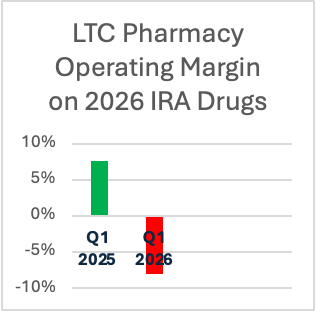
To help prevent disruptions in patient care, CMS encouraged payers to adequately reimburse LTC pharmacies and many payers increased dispensing fees on IRA-negotiated drugs. However, those increases– averaging an additional $7.61 per script – fall significantly short of the amount needed to adequately cover the costs of dispensing medications and round-the-clock clinical care in LTC settings. An earlier ATI analysis found that LTC pharmacies would need between $20.43 and $31.67 to make up for the shortfall.
“The data confirms what our members have been warning policymakers about,” said Esmé Grewal, President and CEO of SCPC. “LTC pharmacies are being forced to absorb growing financial losses because the current Medicare payment structure does not correspond with the true cost of providing specialized pharmacy services to our nation’s most vulnerable patients.”
“While we are grateful that some payers have stepped in to increase dispensing fees in an effort to dampen the damage, the increased fees do not come close to covering the unintended consequence of the IRA’s drug price negotiation program on LTC pharmacies, and the pharmacies have no certainty these fees will continue, underscoring the need for a permanent payment solution. Congress and the Administration must act to examine and establish a permanent payment model that protects patient access to essential long-term care pharmacy services as our aging population significantly grows. The Preserving Patient Access to Long–Term Care Pharmacies Act asks the Government Accountability Office to do just that and suggest models that can lead to sustainability of these pharmacies, particularly in rural regions which cannot manage their closure. Our industry’s incredible outcome data is exactly where it needs to be, our payment system is not.”
LTC pharmacies provide enhanced medication management, emergency deliveries, consultant pharmacist services, compliance packaging, and clinical support tailored to residents of nursing homes, assisted living communities, and other LTC settings. Unlike traditional retail pharmacies, these specialized services require significant infrastructure and clinical expertise not adequately recognized under current reimbursement policies.
The new analysis reinforces SCPC’s longstanding call for Congress and the Administration to modernize Medicare payment for LTC pharmacy services. Without meaningful reform, many small and independent pharmacies will continue to face mounting financial pressure that could ultimately jeopardize access to high-quality medication management and pharmacy care for the more than three million Americans in long-term care.
This data shows that there is need for immediate relief to the long-term care pharmacy sector. SCPC urges Congress to provide that relief through passage of the Preserving Patient Access to Long-Term Care Pharmacies Act (HR 5031/S 3159) and for CMS to continue to work with payers to provide relief. SCPC will continue working with Congress and the Administration to advance long-term sustainable payment solutions that preserve access to LTC pharmacy services for America’s aging population.
# # #
The Senior Care Pharmacy Coalition (SCPC) is the only national organization exclusively representing the interests of LTC pharmacies that serve nearly three million patients in nursing homes, assisted living facilities, and other long-term care settings.
Recent Posts
-
Feds take ‘massive’ step toward new pay system for LTC pharmacies
Jim Berklan // McKnights – November 17, 2026 Long-term care pharmacy advocates took a victory lap this week, hailing what they see as a historic step in their quest to get greater recognition — and pay — from government leaders. The source of their pleasure was congressional leaders’ request for the Government Accountability Office to […]
-
SCPC Urges CMS to Recognize LTC Pharmacies as Essential to Patient Access
On November 18, the Senior Care Pharmacy Coalition (SCPC) submitted comments to the Centers for Medicare & Medicaid Services (CMS) in response to the agency’s Draft Program Instructions for Identifying Essential Pharmacies and Affiliated Retail Pharmacy Data Collection. As CMS works to identify and publicly report on essential retail pharmacies, SCPC emphasized the importance of […]
-
SCPC Concludes Video Series with Focus on the Importance of Advocacy for the Long-Term Care Pharmacy Community
SCPC launches “The Importance of Advocacy,” a new video showing the power of a united voice for long-term care pharmacy. As the industry’s chief advocate, we know meaningful policy starts with understanding what it takes to care for our most vulnerable patients every day. Our members bring that understanding directly to lawmakers, sharing the challenges […]
Stay Connected
Get the latest news and updates on issues impacting the long-term care pharmacy community.